
Rewatching/Rethinking: Heat is Romantic
“dudes rock” surely existed in the 1800s

Sometimes a man in the classic flannel + mustache combo (with an earring if I’m lucky) will ask me my favorite movie and I get to say, “Michael Mann’s Heat”. If they’re a Secret Misogynist Film Bro, they get to act surprised and I get to laugh at this “nOt LiKe oThEr gIrLs” schtick of mine. Everyone goes home happy and I go home to do my yearly rewatch of Heat (1995).
In summary, Heat tells the story of skilled thief, Neil McCauley (played by Robert De Niro), as he methodically plans his crew’s next heist while LAPD detective Vincent Hanna (played by Al Pacino) hunts him down. Heat is in my top four favorite films for countless reasons. My boyfriend Al Pacino has the best face in the world. I love movies that feel like operas. Since I watched action movies too young, my guilty pleasure is a self-indulgent shootout and car chase. The memes from Heat are great, its cinematography is stylized, and I love reciting behind-the-scenes trivia to friends. With each rewatch, I notice new parallels and details. It’s an outstanding film on all levels. 10/10 - no notes.
By my third viewing of the film, I decided that this neo-noir picture wasn’t just one of the best of the past fifty years, but also the most Romantic- and not just because Pacino and De Niro crackle with chemistry during their shared scenes. With this conviction, I gathered my arguments and observations and tucked them under my arm to loudly tell people: Heat is Romantic. As in belonging to the Romanticism of 1800s Europe.
Romanticism was defined by a renewed spirit of individuality and emotion across art in contrast to the values of reason and intellect prioritized in the Enlightenment, which fueled the founding of the United States and the sparks of the French Revolution. All this social upheaval turned the arts towards an exploration of the self rather than an exploration of social contracts. What did carry over from the Enlightenment is the motif of the prioritization of individual freedom, now highlighted against the natural world rather than society. The plot of Heat could be from a 1850s novella and still fit the tone of the era. The key difference is how this post-modern/1990s story explores the themes of individual freedom against the backdrop of a fast-paced and apathetic city.
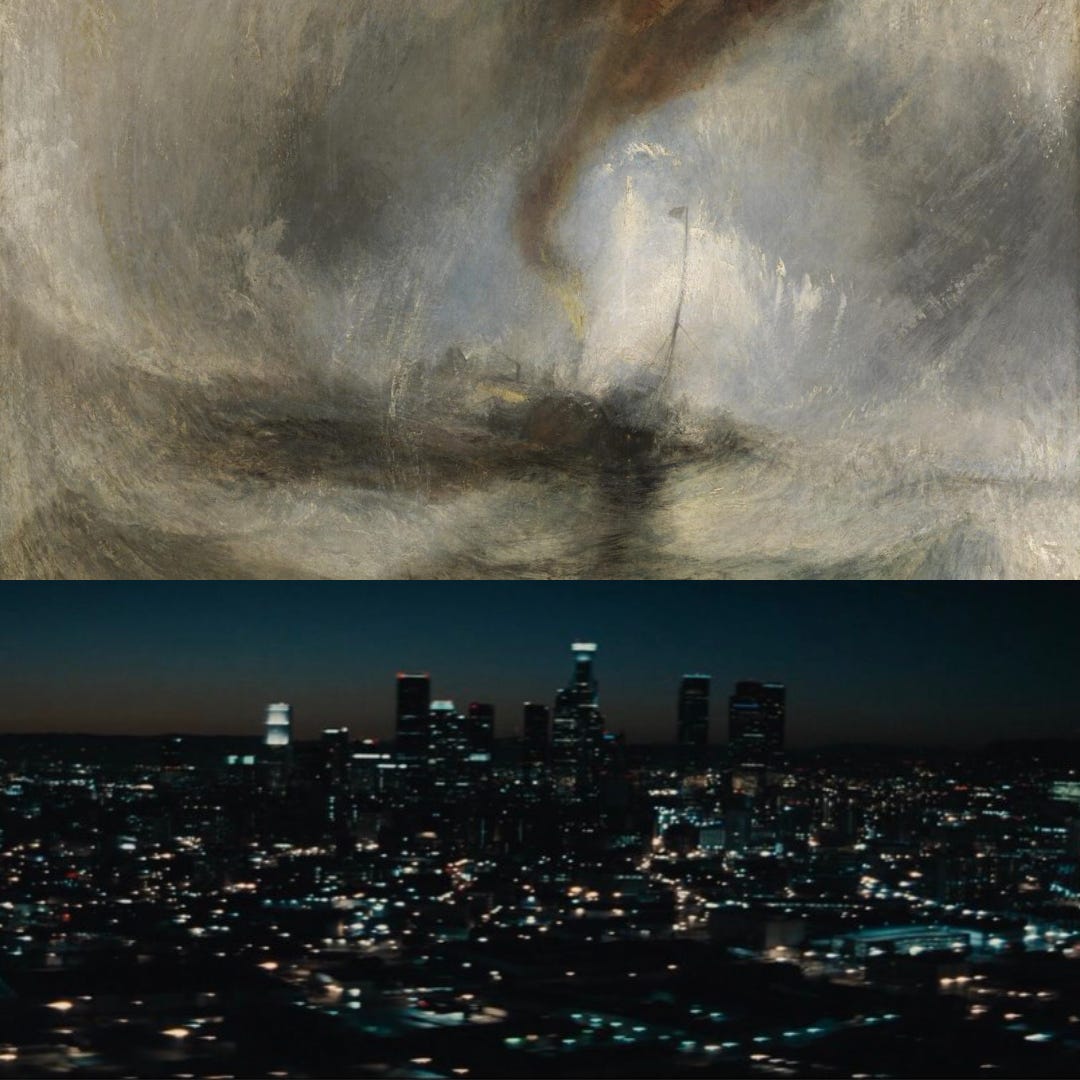
pictured: J.M.W. Turner’s Snow Storm & the Los Angeles skyline in Heat
The painters of this time period (Friedrich, Goya, Turner, etc…) focused on soft lighting, scenes of nature, or the mythical. Before Romanticism in art, we had Classicism and Neoclassicism, featuring pale characters in robes lounging on marble steps. The style was stricter and less dynamic than Romanticism, which shifted the subject matter of painting from the religious and historical to include more mythology and scenes of daily life. It’s worth noting that when Romanticism ended it gave way to Realism, a style that avoided exaggerated, embellished elements and stuck to depicting reality as truthfully as possible.
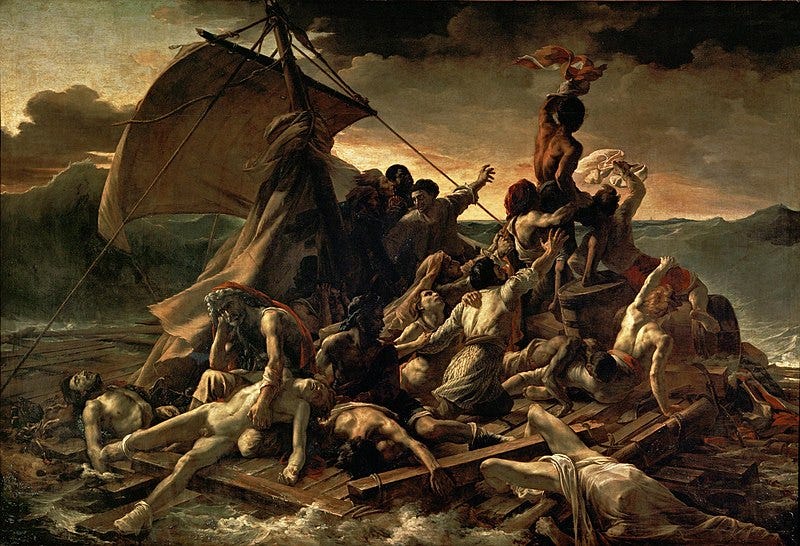
The inherent violence of the Industrial Revolution and turbulent social movements influenced both art and literature. Painters didn’t just create relaxing beach scenes, but emotional scenes of turmoil and carnage. The feeling evoked within me from Géricault’s The Raft of the Medusa and Heat’s famous downtown L.A. shootout scene is the same. It’s excessive and absurd, yet still true. And did you know they shot real blanks?
What’s missing from my “Heat is Romantic” claim is the overwhelming presence of nature. Visually, there is no reprieve from the roads and fluorescents in the film. Apart from a few shots of the ocean and hills (where De Niro’s Neil goes to be alone after a long day of being the brains behind his operations), there is very little nature in this movie. Especially nature as force large enough to be a character and narrative presence. Where subjects in paintings from this era are swallowed up by the enormity of the sky or woods, Heat’s protagonists are swallowed by urban sprawl. The screen replaces sweeping landscapes with the concrete labyrinth of infrastructure that is Los Angeles.
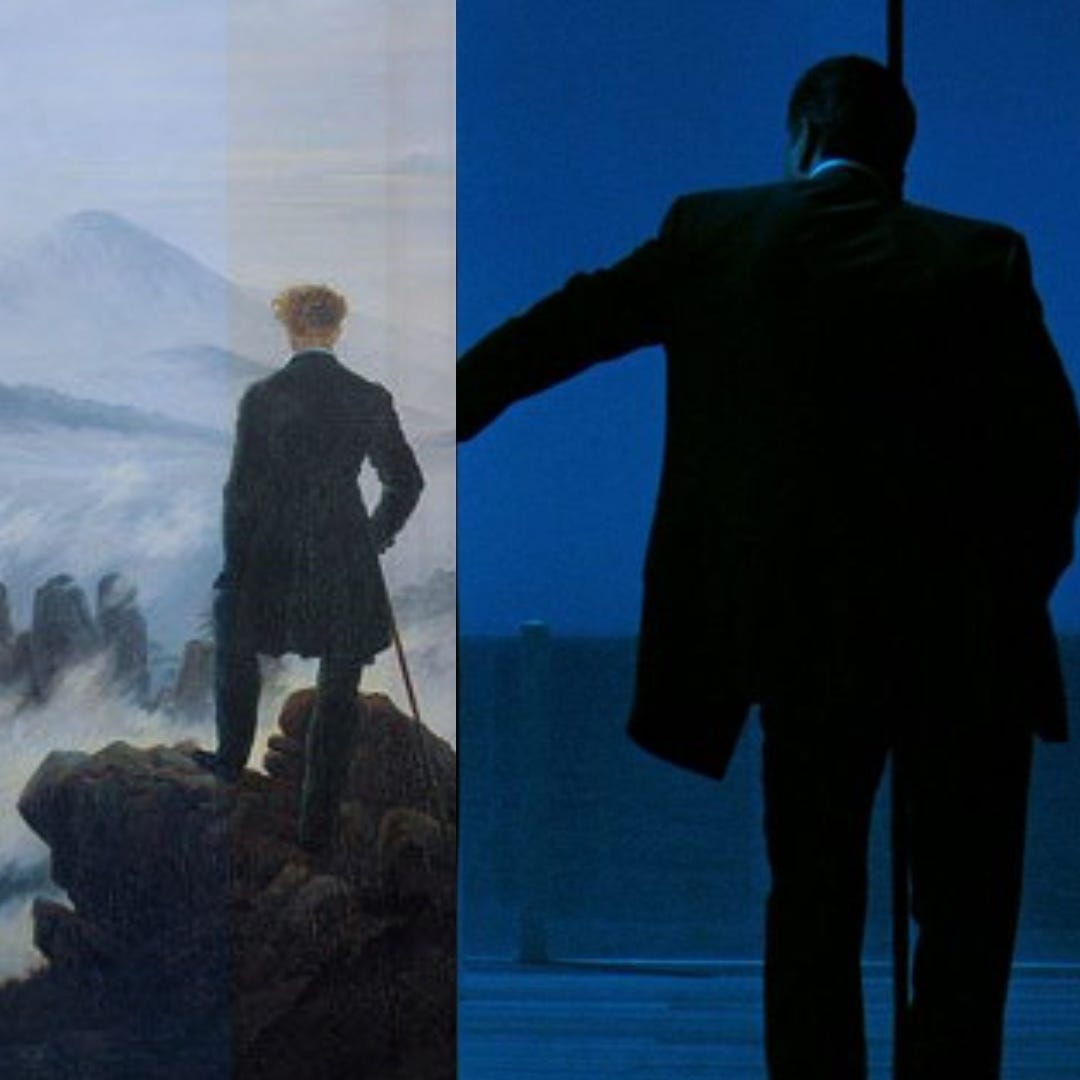
pictured: Wanderer above the Sea of Fog by Caspar Friedrich & Robert De Niro in his barren home
The English literature writers of this time were Mary Shelley, Lord Byron, Percy Shelley, William Wordsworth, John Keats, etc… The work of these writers focused on themes of isolation, the exploration of the human psyche and subjective truths, as well as valuing the innocence of children. These are themes we also see in Michael Mann’s script (Natalie Portman’s troubled teen character and children being put in the middle of the literal shootout being one example of the innocence of children juxtaposed against the indiscriminate ruthlessness of crime).
Lord Byron’s “Byronic hero” emerges from these Romantic works, defined by a moody, dark, cynical nature and air of personal tragedy - an early anti-hero abiding by their own code of ethics. I can’t think of better anti-heroes than a dysfunctional cop and a disciplined thief. Both Vincent and Neil are driven by their commitments (race to catch a criminal and race against time respectively). These commitments put them at odds with other characters and leave them isolated. While overlooking the city, Neil tells Eady, “I am alone, I am not lonely.” In another scene, Vincent’s wife dryly tells him -
You don't live with me, you live among the remains of dead people. You sift through the detritus, you read the terrain, you search for signs of passing, for the scent of your prey, and then you hunt them down. That's the only thing you're committed to.
The characters are foils of each other, obsessed with their work and unsatisfied with the world they live in and the lives they inhabit. It’s fitting that the film should end with them holding hands.
Can Heat still be Romantic in the absence of a relationship to the natural world and without any supernatural themes? As Romantic as Heat is to me, it is still shrouded in the aesthetic of the American 1990s. The shades of blue, the Gen-X soft club aesthetic, the inklings of interpersonal apathy… it’s all a time capsule of late-90s malcontent.
Don’t let yourself get attached to anything you are not willing to walk out on in 30 seconds flat if you feel the heat around the corner.
In case you missed it in the first act, our duo’s motivations are neatly and explicitly laid out in the iconic diner scene. Their actions are as instinctual to them as breathing, there is no other way to be. It’s their nature. And that’s what makes the mood of the second act so melancholic, angsty, and tortured. The inner world of the two characters and musings may as well be lifted from the pages of a 19th century novel.
HANNA:
So then, if you spot me around that corner, you just gonna walk out on this woman? Not say goodbye?NEIL:
That's the discipline.HANNA:
That’s pretty vacant.NEIL:
Yeah, it is what it is. It’s that or we both better go do something else, pal.HANNA:
I don't know how to do anything else.NEIL (the shared confession):
...neither do I.HANNA:
And I don't much want to, either.NEIL:
Neither do I.

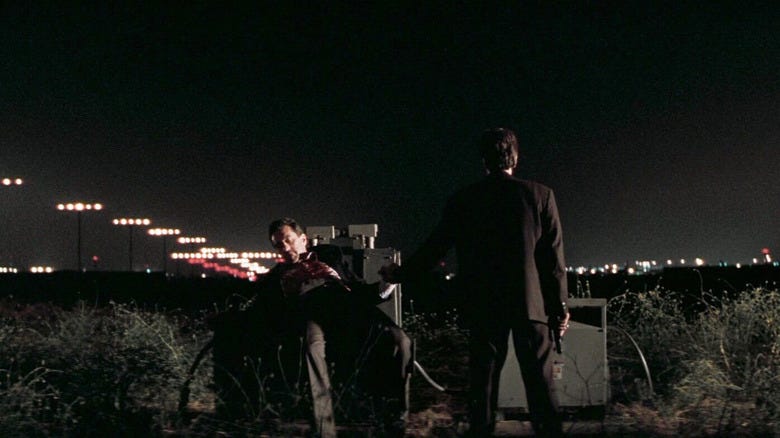
I am so moved by the conclusion of the film because of course it was always going to end this way. Human nature is its own form of pre-determinism. A groan when Neil can’t just walk away from Waingro. A gasp when he leaves Amy Brenneman’s character (great hair, forgettable name). The final stand-off being in the fields of the LAX tarmac, with elements of nature and the possibility of escape. “Told you I’m not going back.” Individual freedom worth dying for.
And then I cry my eyes out as Moby’s song (God Moving Over the Face of the Waters) plays into the credits. What’s more Romantic than that?
Further Reading:
my first Rewatching/Rethinking was about Lost, another piece of media that never fails to make me cry at the end
The History of Forgetting: Los Angeles and the Erasure of Memory by Norman Klein - this book mentions Heat once (1) but it’s a very interesting deep dive on the history of Los Angeles neighborhoods + urban design. Heat could have taken place in New York or Chicago, but what makes it distinct is the Los Angeles skyline and highways constantly moving in the background like waves at the beach.
my treasured Heat vibes playlist lol